From Sept 1-30th 2025:
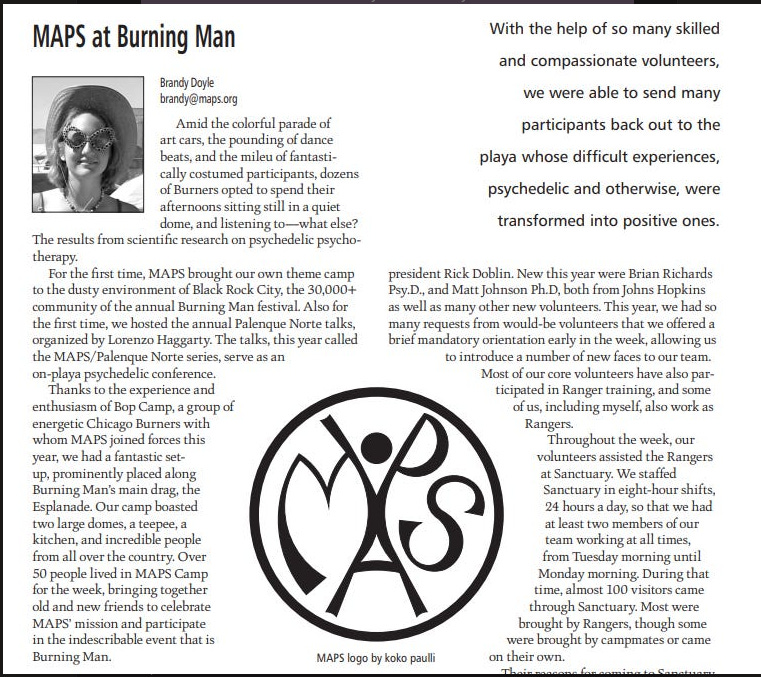
1.9.2025 – Holotropic Breathwork at Burning Man
4.9.2025 – Quote from Gezon and Barlett, 2025
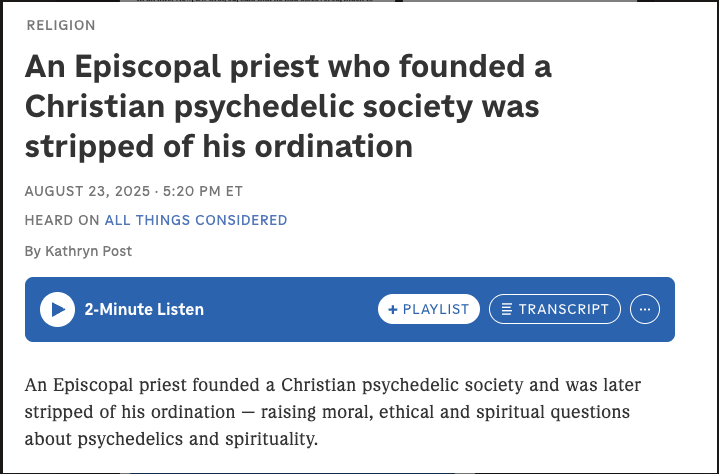
4.9.2025 – All Things Considered talk about JHU/NYU spiritual leaders experiment
4.9.2025 – 2024 NYT (extremely pro) article on Holotropic Breathwork
4.9.2025 – Ubiquity University’s Extraterrestrial Studies and Phd in Grof
8.9.2025 – Stroboscopic lights
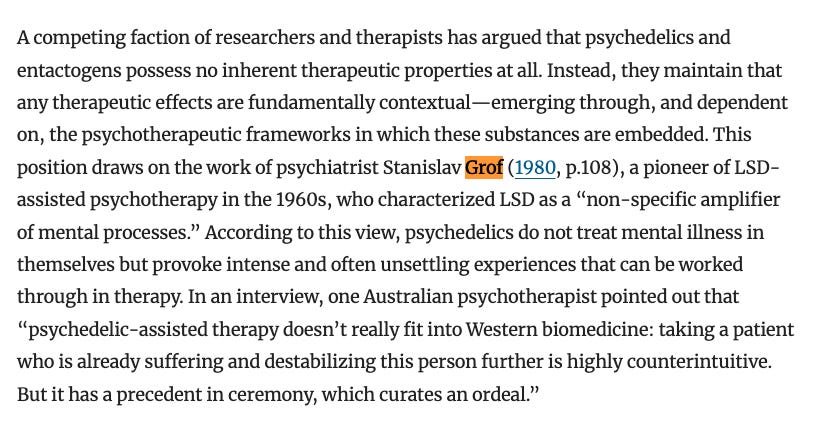
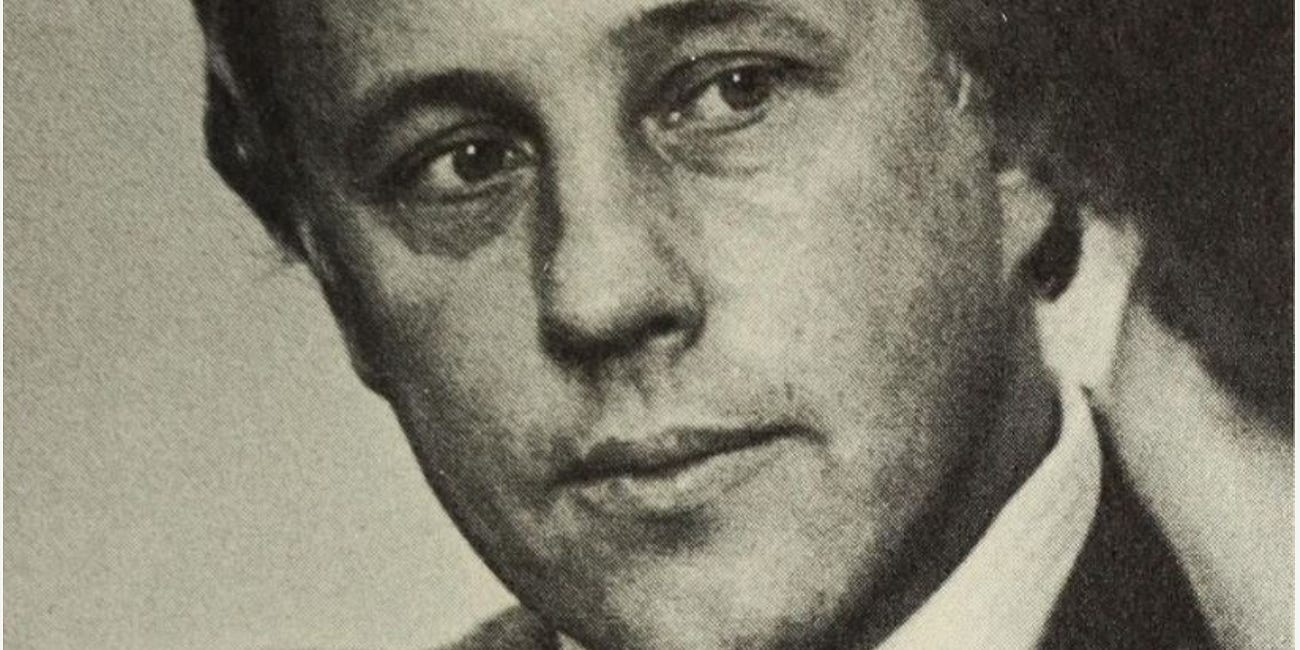
9.9.2025 – Mention of Grof and Australian psychotherapist in new article from Langlitz
10.09.2025 – Eduardo Schenberg blocked me on Linked-in
10.09.2025 – Justin Baldoni and Stan Grof support William Keepin’s“Gender Equity and Reconciliation” movement
15.09.2025 – Victim blaming in Holotropic Breathwork
16.9.2025 – ChatGPT and psychedelics
18.9.2025 – Critique of Goldpaugh on healing sexuality and homophobia in Grof’s work
20.9.2025 – Oprah’s decades-long promulgation of repressed memory pseudoscience
22.9.2025 – Russian elites and alternative medicine
22.9.2025 – Grof’s (not so) true synchronicity story about Neil Armstrong
23.9.2025 – Tylenol, pregnant women and Grof
24.9.2025 – Critique of the NYT’s critique of The Tell
30.9.2025 – Critique of Alan Groveman’s paper on of MDMA Couples Therapy
I just read this new chapter on MDMA couples therapy in a non-psychedelic-related academic book on contemporary issues in therapy link.springer.com/book/…. I’m only on the first page and have to write a note because there is a wild Grof reference. Alan Groveman (no ties to Grof/MAPS as far as I can find), writes:
“In more recent times, LSD was synthesized in 1938 by Albert Hofmann (Osmond, 1957). By the 1950s, it was being explored for various therapeutic applications, especially as an adjunct to psychotherapy. Stanislav Grof, a prominent researcher during this period, performed many sessions (over 40,000) using LSD to treat a range of conditions (Grof, 2008). Unfortunately, growing public interest in LSD precipitated unsupervised and unregulated recreational use of the drug, and in 1970 the USA passed the Controlled Substance Act listing LSD and psilocybin as Schedule I drugs (Vattano, 1981).”
There are two major issues with this. First, I’ve never seen Grof claim anywhere that have performed “over 40,000” LSD sessions — this is an impossible figure. The figure cited by Tim Ferris is 4,500, though I’ve never seen anything that backs this up — who knows. What’s more important, though, is the second thing wrong with this summary: it’s uncritically repeating the Grofian version of Grof’s story and history of psychedelic research. It’s Grof promulgation matrices IV in full swing — I don’t think this author really knows who Grof is, he’s just repeating the story.
One of my research interests is MDMA couples therapy. I wrote this critique of the current research and the lack of consideration of coercive control.
Groveman mentions that a Time Magazine article suggests caution against underground guides and people with prior experiences of significant trauma, but makes no mention of sexual abuses, domestic violence or coercive control and the safety implications when combined with a suggestibility-enhancing drug.
Goveman also cites Janice Phelps (GPM II — CIIS psychedelic therapy coordinator and long-time Grof core supporter) guidelines for the therapist competencies. I mentioned in Quick Breather #6 that Wolff et al.’s recent paper makes it clear that they view Phelps guidelines with necessary strong critique:
“Due to its complex cultural and medical history, psychedelic therapy develops in a field of tension between competing paradigms—biomedical, psychotherapeutic, and scientific on the one hand; counter-cultural, (neo-)shamanic, spiritual, and psychonautic etc. on the other [53]. Elements from these in part contradictory frameworks are blended not only into clinical research protocols [139] but also training programs, at times creating peculiar mixes of science-oriented and esoteric content. Previously proposed lists of competencies for psychedelic therapists (e.g., [101 [Phelps, 2017],109 [Rochester J, Vallely A, Grof P, Williams MT, Chang H, Caldwell K. Entheogens and psychedelics in Canada: proposal for a new paradigm. Canadian Psychology / Psychologie Canadienne 2022;63(3). doi.org/10.1037/cap0000…. Article 3.]) likewise build in part on limiting or scientifically questionable models such as transpersonal psychology, emphasize exceptional and ill-defined abilities (e.g., “spiritual intelligence”), or vaguely invoke knowledge of “indigenous practices” with psychedelics (thus risking to treat the rich cultural diversity of indigenous psychedelic use as a single, uniformly beneficial tradition presumed to fit seamlessly within Western health care systems).
Groveman continues his review of good practice by next citing Michael Mithoefer (GPM II – certified Holotropic Breathwork facilitator who has a picture of Grof in his office looking down over everything he does). It is honestly beyond comprehension to me how Groveman, Mithoefer, and so many others can believe that saying “we encourage you to…” instead of “do this” is “non-directive”. It’s as though they take the world in an entirely flat, literal way at all times. I have noticed that there is a distinct lack of irony in the humour of GPM I-III from what I’ve seen, especially the GPM II — there’s a deep earnestness:
“Many authors highlight the importance of the therapist in successful MDMAassisted therapy and a focus on the inner experience catalyzed by MDMA (Metzner & Adamson, 2001; Mithoefer, 2015). Mithoefer (2015) emphasizes empathic listening skills including: (1) Minimal encouragement, verbal and non-verbal; (2) Invitation rather than direction; (3) Paraphrasing; (4) Reflecting; (5) Emotional labeling; (6) Validating; (7) Reassurance and waiting; (8) Allowing participants to come to conclusions themselves. Non-directive communication also uses invitation rather than direction. For example: (1) “We encourage you to …”; (2) “This might be a good time to …”; (3) Use the gerund of a word: instead of “breathe” say “breathing” because it is suggestive rather that directive; and (4) Reflecting back to the participant what they are saying in order to continue conversation without being directive”
It keeps getting worse. Groveman then incorrectly suggests that therapists can’t prescribe MDMA but they can sit for clients who ingest their own:
“At the time this chapter is being written MDMA is illegal, except for clinical trials for individuals who have been diagnosed with PTSD. Providers cannot prescribe MDMA but can serve as guides for those couples that want to experience MDMA and self-administer the drug. Of course, this does not resolve the issues of dose level and possible adulteration. Several authors have described protocols that are used for MDMA-assisted treatment (Greer & Tolbert, 1998; Monson et al., 2020) and the necessity for MDMA to be used in conjunction with psychotherapy. Below is a sample protocol for working with MDMA-assisted couple therapy modeled after the Multidiscipline Association for Psychedelic Studies recommendations (Mithoefer, 2015).”
Greer is GPM I — he was around Grof as a medical student, inspiring him to later start the Heffter Institute who are very closely tied to MAPS and Grof. Greer’s bio reads:
“George Greer completed his undergraduate work at Vassar College and received his M.D. from the University of Texas Medical Branch in Galveston in 1976. Between his third and fourth year of medical school, he attended a six week seminar at Esalen Institute lead by Dr. Stanislav Grof. Greer speaks of his experiences at Esalen, “This training with internationally respected authorities in the subject using altered states of consciousness in psychotherapy convinced me that the field had a great untapped potential for psychiatry”
Finally, Groveman concludes an extensive section of recommendations that omit any mention or considerations of any sort around interpersonal safety, he goes on to recommend transpersonal psychology as the third component of MDMA couples therapy :
“A third component facilitated by MDMA is transpersonal psychology, which examines the relationship between psychology and spirituality. Transpersonal psychology can assist couples in exploring their spiritual and existential aspects together in psychedelic-assisted marital therapy. Couples using psychedelics may have deep spiritual and mystical experiences that increase their feeling of purpose and interconnectedness in their relationship. To foster both personal and interpersonal development, therapists can assist couples in incorporating these experiences into their everyday life and relationships.”
Overall, this is yet another wildly dangerous review of MDMA couples therapy that doesn’t give a passing mention to known issues that can come about with this drug. I’ll never stop repeating: any discussion of couples therapy that doesn’t address coercion and control in the relationship is incomplete.
24.9.2025 – Critique of the NYT’s critique of The Tell
In the last two weeks, I’ve been grappling with the book The Tell. I’ve been increasingly disturbed by listening to more and more interviews with the author and tracing the ties. I’m so relieved to see some further critical coverage from the NYT, though this article feels like it could’ve gone a lot further on many points, and instead feels overly focused on being about Amy, personally, rather than the entire world of consprituality she blooomed from. They seem to pit two women against each other, with Amy’s lawyer calling the other woman “a liar” which is truly appalling.
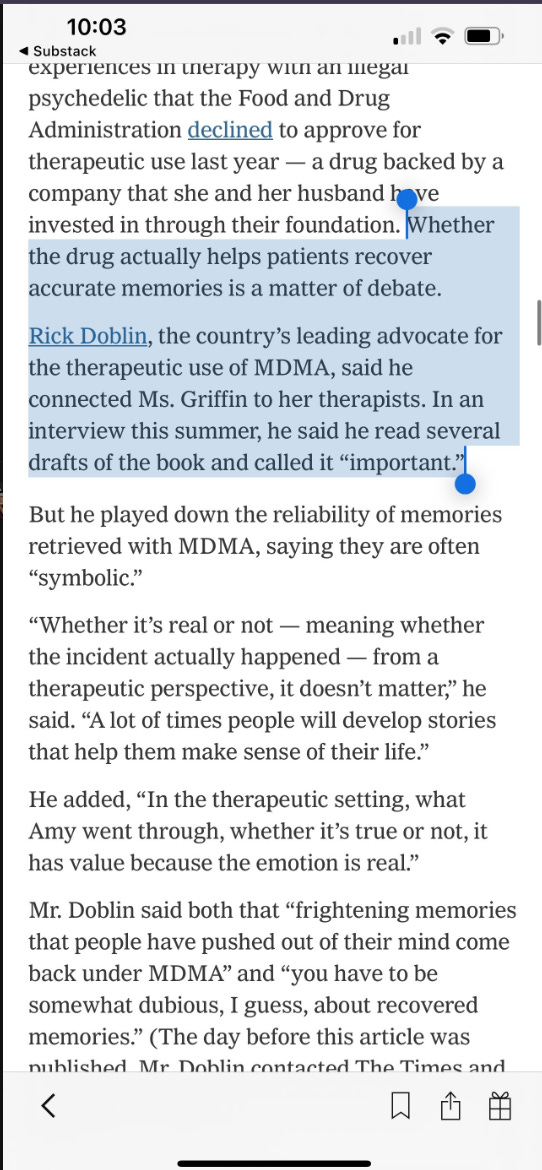
Instead, NYT could have scratched just fraction of the surface on Doblin, MAPS and just how dubious their entire therapy manual is. Funny because I already spent an hour of my life explaining the issues with repressed memories and this therapy to NYT journalist Andrew Jacobs back in January — he decided to ignore everything. I also brought up repressed memories as a serious issue in my FDA comment.
The NYT also doesn’t mention that her PR for the book claims that a book publisher just plucked her out of nowhere — every interview mentions her “writing on the bathroom floor” just for herself. Instead, it turns out she had a ghost writer and was pitching it all over.
Of course, I had all my suspicions confirmed about this going back to MAPS. Indeed, Holotropic Breathwork facilitator Rick Doblin is the person who connected Amy with her therapists. What are the chances that these facilitators are themselves Holotropic Breathwork facilitators? They are almost certainly close in the community, if not.
I also strongly suspect at least part, if not most, of the proceeds from the book are going to MAPS. I emailed about this a few days ago, not sure if I’ll hear back…
I wrote some notes on the tell in the show notes for my latest quick breather and the NYT article is here:
23.9.2025 – Tylenol, pregnant women and Grof
What does today’s “pregnant women taking Tylenol is to blame for the autism epidemic” announcement have to do with Grof? Well, lots really.
The entire trope is just: blame women. Nothing new. Autism used be caused by cold, heartless “refrigerator moms”. There’s always a new way to blame women’s choices and actions as the entire cause of all of society’s ills.
Grof’s entire perinatal theory casts women’s bodies as the site of the original trauma, through which all life patterns will resonate and abound. “Rebirth” is the key to healing/liberation, by passing back through but this time with control. Grof’s framework of healing is the same template as Trumps — the reproductive body is the problem that must be controlled and transcended. From Grof’s 2012 talk Human Destiny: End of the World or Consciousness Revolution?:
“It is clear that a transformation associated with the experience of psychospiritual death and rebirth would increase our chances for survival if it could occur on a sufficiently large scale. The great German writer and philosopher Johann Wolfgang Goethe was aware of the importance of the experience of psychospiritual deth and rebirth for the quality of our life and sense of belonging when he wrote in his poem Selige Sehnsucht: “Und so lang du das nicht hast, dieses: Stirb und werde! Bist du nur ein trüber Gast auf der dunklen Erde.” (And as long as you do not experience this: “Die and become!” you will be only a shadow guest on the dark earth).”
Grof is literal about his beliefs. He argues that to save society from collapse, we need to improve the birthing process itself. This is one of those points where I agree with Grof to an extent, but from a completely different angle. Grof believes birth needs to be “natural” and sets up an entire belief system around this. Here’s from a 1995 talk:
“Let us now look into the future and explore the various avenues that would have to be pursued should the concepts that have emerged from the transpersonal field and the new paradigm in science be put into action in the world. Although the past accomplishments are very impressive, the new ideas still form a disjointed mosaic, rather than a complete and comprehensive world-view.
Much work has to be done in terms of accumulating more data, formulating new theories, and achieving a creative synthesis. In addition, the existing information has to reach much larger audiences before a significant impact on the world situation can be expected.
But even a radical intellectual shift to a new paradigm on a large scale would not be sufficient to alleviate the global crisis and reverse the destructive course we are on. This would require a deep emotional and spiritual transformation of humanity. Using the existing evidence, it is possible to suggest certain strategies that might facilitate and support such a process. Efforts to change humanity would have to start with psychological prevention at an early age.
The data from pre- and perinatal psychology indicate that much could be achieved by changing the conditions of pregnancy, delivery, and postnatal care improving the emotional preparation of the mother during pregnancy, practicing natural childbirth, and emphasizing in the postpartum period emotionally nourishing contact between the mother and the child.
Much has been written about the importance of childrearing, as well as disastrous emotional consequences of traumatic conditions in infancy and childhood. Certainly this is an area where continued education and guidance is necessary. However, to be able to apply the theoretically known principles, the parents have to reach sufficient emotional stability and maturity themselves. It is well-known that emotional problems are passed like curse from generation to generation. We are facing here a very complex problem of the chicken and the egg.
Humanistic and transpersonal psychologies have developed effective experiential methods of self-exploration, healing, and personality transformation. Some of these come from the therapeutic tradition, others represent modern adaptations of ancient spiritual practices. There exist approaches with a very favorable ratio between professional helpers and clients and others that can be practiced in the context of self-help groups. Systematic work with them can lead to a spiritual opening, a move in a direction that is sorely needed on a collective scale should our species survive. It is essential to spread the information about these possibilities and get enough people personally interested in pursuing them.
We seem to be involved in a dramatic race for time that has no precedent in the entire history of humanity. What is at stake is nothing less than the future of life on this planet. If we continue the old strategies which in their consequences are clearly extremely destructive and self-destructive, it is unlikely that the human species will survive. However, if a sufficient number of people undergoes a process of deep inner transformation, we might reach a level of consciousness evolution that will bring us to the point of deserving the name given to our species – homo sapiens.” – Consciousness Evolution and Planetary Survival:* Psychological Roots of Human Violence and Greed. Stanislav Grof, M.D., 1995
22.9.2025 – Russian elites and alternative medicine
From a 2023 Newsweek article: “The daily Russian newspaper Kommersant said there has been a surge in demand for topics linked to mysticism in the media this year. The popularity of such content has been growing since 2022, when Putin launched his full-scale invasion of Ukraine. “Such projects are more popular precisely at a time when citizens are looking for ways to escape from reality,” a Kommersant source said.
The Russian president himself is reported to have an interest in the pseudosciences and the occult. Investigative journalists reported in April 2022 that Putin is accompanied on trips by multiple doctors. He is interested in alternative medicine, including bathing in the extracts of deer antlers.”
22.9.2025 – Grof’s (not so) true synchronicity story about Neil Armstrong
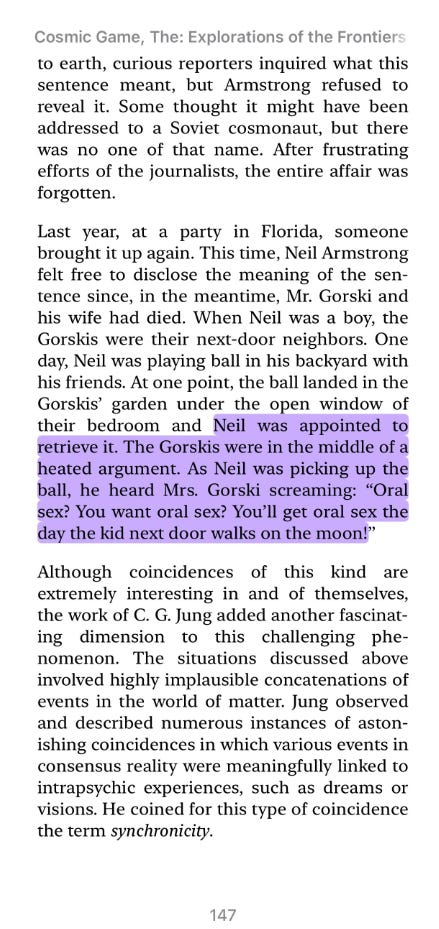
In Grof’s 1997 book, The Cosmic Game, he tells the “true story” of a synchronicity that happened to Neil Armstrong. The story is lewd and ridiculous, but Grof is fully convinced this is great proof of the limits of materialist explanations for the universe.
In fact, there’s no record of Neil Armstrong telling this story. Instead, as NBC reported in 2012, it’s most likely the tale of a comedian.
““The existence of such extraordinary coincidences is difficult to reconcile with the understanding of the universe developed by materialistic science. It is easier to imagine that these occurrences have some deeper meaning and that they are playful creations of cosmic intelligence. This explanation is particularly plausible when they contain an element of humor, which is often the case. I will use here as an illustration a true story from the life of the American astronaut Neil Armstrong, the first man to land on the moon. The astronomical improbability of something like this happening by chance combined with the exquisite humor of the story makes this certainly one of the most unique “coincidences” of all time”
“Descending from the lunar module, just before his foot touched the surface of the moon, Neil Armstrong said his famous words: “One small step for man; one giant step for mankind.” It is much less known that, as he was climbing back from the moon surface into the lunar module, he muttered another sentence, “Good luck Mr. Gorski.” After his return to earth, curious reporters inquired what this sentence meant, but Armstrong refused to reveal it. Some thought it might have been addressed to a Soviet cosmonaut, but there was no one of that name. After frustrating efforts of the journalists, the entire affair was forgotten.
Last year, at a party in Florida, someone brought it up again. This time, Neil Armstrong felt free to disclose the meaning of the sentence since, in the meantime, Mr. Gorski and his wife had died. When Neil was a boy, the Gorskis were their next-door neighbors. One day, Neil was playing ball in his backyard with his friends. At one point, the ball landed in the Gorskis’ garden under the open window of their bedroom and Neil was appointed to retrieve it. The Gorskis were in the middle of a heated argument. As Neil was picking up the ball, he heard Mrs. Gorski screaming: “Oral sex? You want oral sex? You’ll get oral sex the day the kid next door walks on the moon!”
20.9.2025 – Oprah’s decades-long promulgation of repressed memory pseudoscience
“Should [Oprah] run for president, Americans will need to give some thought to her willingness to oblige any feeble thought if it can charm an audience” — Rex Murphy, Repressed memories of Oprah and her contributions to medicine
In 2018, Rex Murphy (a conservative Canadian moral-outrage style opinion columnist who I begrudgingly quote) wrote an op-ed about Oprah and her contributions to the pseudoscience of repressed memories. Oprah is back to promulgating repressed memory therapy once again, this time with MDMA.
Today I watched Oprah’s interview with Amy Griffin, author of The Tell. There is absolutely no mention of the issues with repressed memories or Oprah’s experience with the topic. Really adding to the surrealness was that the whole thing was a Starbucks ad — this is real life, folks.
Here’s more from Murphy’s article:
“Oprah showcased the very Queen of Multiples, Michelle Smith, author of “Michelle Remembers” (“the true story of a woman, who as a child … was delivered into the hands of the Antichrist!”). Smith, who was clearly on her way to self-declaration as a one-woman, full-voting UN state, claimed an astonishing 92 discrete personalities, all uncovered from the thicket of her unconscious through “regression hypnosis.” Naturally Oprah, then desperate for any rocket to take her to orbit as a full TV celebrity, was there, her empathy pack on full charge, to give the fractured Ms. Smith and her delusional or fabricated fantasies full airing….Medicine has always been an Oprah specialty — that and of course the new-age, inner-child, bespoke spiritualism of the West Coast Hollywood flapdoodles. (Gwyneth Paltrow’s fascination with her colon (and yours) and the Gospel of Goop are but second-hand Oprahisms.)…
Her next real shaman — sorry shaperson — was none other than Baywatcher and erstwhile Jim Carrey mate Jenny McCarthy, who took full advantage of the Oprah TV town hall to warn America and the world of the dangers of vaccination and its infallible “connection” to autism. Medical advice on the calibre of Jenny McCarthy’s musings is normally (there is a God) very hard to come by. With Oprah’s help it was front of the bookstore. And what a boon. Jenny McCarthy or the Mayo Clinic? I know where my money is.
Were there world enough and time I would continue with her greatest medical discovery — Dr. Phil. How Western medicine has struggled along since the days of Hippocrates and Paracelsus without the attentions and manners of Dr. Phil, neither I nor you can know. But he is here now, sprung like Athena from Zeus’s head, out of dear Oprah’s equally pregnant cranium.”
18.9.2025 – Critique of Goldpaugh on healing sexuality and homophobia in Grof’s work
CW: sexual and intimate partner/family violence
I don’t really have the words to express how disillusioned I am to see a queer-afirming advocate write a book that gives an entirely false portrayal of Grof’s homophobia. It’s additionally bizarre considering they were a co-author on the Open Letter to Stan Grof that clearly identifies Grof’s queerphobic orientations over decades of his career. Instead of reconciling with this, Dee Dee Goldpaugh’s new book repeats the false narrative of Grof being just a product of his time, deserving of our empathy.
Goldpaugh suggests that we need to humanise and move beyond perpetrator/victim. Yet, their own narrative of Grof casts him in a hapless role of being a mere victim of the time period he existed in. Goldpaugh strips Grof of his agency and how Grof made active choices, over decades, to imbue his work with heteronormativity.
Goldpaugh is someone whose opinion I highly valued and trusted when I first entered this field as a queer person. This is why it troubles me so much to see someone like them perpetuating what is simply false information about Grof.
I’ve read the first chapter of their new book, but I’m not sure if I’m going to read the rest of the book. Just like their friend Anne Wagner, Goldpaugh has written on relationships and sex without a single mention of domestic violence or coercive control. This genuinely scares me. I cannot tell you how many people I have talked with who have been to therapy (couples or alone) who have worked with a therapist who completely failed to identify coercive control and abuse — countless. And I’m not talking about “minor” abuse.
In a horrific case in Australia that happened while I was working in DV crisis response (in a different city), a psychologist who described themselves as having ‘expertise’ in DV, completely failed to identify extremely obvious signs of highly controlling behaviour. How obvious? The guy was coming to therapy for his highly controlling behaviour. She ignored this and wrote him a glowing letter for family court, advocating for him to have more contact with his kids — including one he had already kidnapped. What happened? A month later, he murdered his 3 children and ex-wife. He was not a ‘mastermind’ or clever at all — I know this case well, and there were overwhelmingly signs of extreme coercive control that the psychologist ignored. The psychologist, perhaps believing (foolishly) in the inherent goodness of people, decided to ignore these signs completely. Later in court, they were unable to explain why. Frankly, in my opinion, they were just living in Fantasyland about the seriousness of these behaviours.
This was not an isolated extreme case. There are countless people living with partners, exs, parents who are extremely abusive, but haven’t killed them — they just kill their autonomy every single day. Naming coercive control and abuse and recognising that it must be part of every conversation about relationships, especially couples therapy conversations, is something that I will never stop advocating for.
Another issue in the book is the topic of repressed memories. I’ll leave my comments on this for another time because reading this chapter is exhausting. But as a brief example: Goldpaugh writes that 90% of EMDR therapists “believe the mind is capable of blocking out memories and later recalling them” and uses this to support clinician perspectives vs researchers, as an EMDR therapist themselves. A quick glance at the reference finds it’s a review article. This is a classic mistake made by undergraduate students — citing a review instead of the original research. When I found the original study, I found that the 90% figure was cherry-picked from one of the substudies with n=12 EMDR practitioners. The study was also highly critical of the EMDR therapists’ unscientific beliefs and discussed this in relation to contemporary science on memory:
“We explored beliefs and ideas about memory in samples of EMDR practitioners (Study 1: n 12; Study 2: n 41), students (Study 1: n 35; Study 2: n 24), and researchers (Study 2: n 30). All groups seemed to be aware of the fallibility of memory. However, a majority of the surveyed EMDR practitioners (70 –90%), students (around 90%), and researchers (66.7%) endorsed the controversial idea of repressed memories. Skepticism and endorsement of problematic ideas about memory-related topics may coexist within the same group. In clinical settings, this might be problematic, because a strong belief in repressed memories might lead therapists to suggestively seek for such memories in patients.” – Houben et al., 2020
As Goldpaugh mentioned in their interview with Joe Moore (GPM II – zero mention of Grof in the interview), a big motivator for them to write this book was to throw a book release party. I realise this sounds pretty salty, if not just plain mean, but that seems like the best way to sum up this book from what I’ve seen/heard so far — a book written for the sake of throwing themselves a party.
16.9.2025 – ChatGPT and psychedelics
Psychedelics are like chat-gpt: a non-specific amplifier of patters that can make you feel and believe you’ve discovered something uniquely profound. This story on how “ordinary” i.e not psychotic people, can fall into fantasyland through ChatGPT, mirrors how this happens with psychedelics and/or the community of believers around Grof who create a folie à deux (ou quelques milles). It’s not just “cranks” who fall for Grof’s theories and chat-GPT delusions.
Also like ChatGPT, the framework of using Grof as the technological framework for MDMA therapy is predictably problematic. From an interview with parents who’s son suicided after extensive conversations with ChatGPT:
“In their complaint, they say this tragedy was not a glitch or an unforeseen edge case, it was the predictable result of deliberate design choices. They say they created this chatbot that validates and flatters a user and kind of agrees with everything they say, that wants to keep them engaged, that’s always asking questions, like wants the conversation to keep going, that gets into a feedback loop. And that it took Adam to really dark places…But right now, there’s no labels or warnings on these chatbots. You just kind of come to ChatGPT and it just says, like, ready when you are. How can I help you?
People don’t know what they’re getting into when they start talking to these things. They don’t understand what it is, and they don’t understand how it could affect them.”
From The Daily: Trapped in a ChatGPT spiral.
15.09.2025 – Victim blaming in Holotropic Breathwork
[A content warning that I’ll be quoting a graphic and deeply ignorant description of sexual and domestic violence]
Here’s an example of the casual victim-blaming and general misogyny you’ll stumble across in the world of Holotropic Breathwork supporters/normalisers.
This comes from a website called breathwork-science . org (I’m not going to link to it, but you can easily find it by googling. This isn’t a peer-reviewed review article, though it does read like one. The authors are entirely uncritical of the research on breathwork and the underlying theories. David Hartman and DIane Zimberoff write,
“For example, a woman named Sasha, an intelligent professional woman, spent years attracting and accepting abusive relationships in her life. In a breathwork session, Sasha returned to her conception, in which scenes of her mother being raped as a young girl came to her. She could feel her mother’s pain, rage and fear, realizing that she had been conceived in a violent rape. During the nine months in the womb she experienced terror caused by her mother’s strong desire to abort her. Her birth was extremely traumatic, followed by her mother’s rejection due to the manner in which she had been conceived. Now everything made sense to her. She could see the repetition compulsion in continuing to attract abusive men who often forced sex on her, beat her and reinforced the deep underlying experience of not being worthy to be alive. She made significant changes over time, possible only with corrective birthing experiences where she was wanted, adored and welcomed into the world, free of violence or abandonment.
Another example is John and Marie, who came in for marital counseling. John was pressuring Marie to get pregnant, but he was physically and emotionally abusive to his wife, and she was hesitant to raise a child in an abusive situation. John was seething with rage toward authority figures or people whom he perceived as having power over him. John discovered in breathwork prenatal experiences that he was an unwanted child, conceived in shame and secrecy by his teenage mother. He spent his nine months in the womb steeped in fear that his mother would somehow “get rid of him.” His conception experience of shame and being unwanted resulted in a birth experience that felt like death to him. His birth was difficult due to his mother’s youth and small size. The doctors used forceps to pull him out, and his experience was of someone trying to “smash” his brains. His defiance of authority figures was displaced rage toward his mother for not wanting him. Through many breathwork sessions, John was able to release his rage toward those whom he perceived as having power over him, especially his wife. He is no longer abusive, and has welcomed a daughter into his life”.
10.09.2025 – Justin Baldoni and Stan Grof support William Keepin’s“Gender Equity and Reconciliation” movement
Justin Baldoni (of It Ends With Us fame, a highly questionable film about domestic violence) has a weird connection to Stan Grof through a New Age pseduo-feminist “MeToo to WeTogether” movement “Gender Equity and Reconciliation”. Baldoni wrote a promo blurb for founder William Keepin’s book. “Gender Equity [the book] is the one certain step to heal humanity…This book and the GERI program illuminate a path to do just that”, wrote Baldoni.
Keepin is part of the Esalen faculty and has been involved in promoting Grof, and likewise Grof for Keepin’s Gender Equity and Reconciliation movement. I looked into this a while ago and mostly just felt like this was a group with a lot of good intentions, but feels more like a community practice for “like-minded” folks. The Gender Equity movement feels akin to what Holotropic Breathwork is good for — uniting people who already share a desire to connect with themselves and others in this way. “Do you want to be part of this? You are warmly welcome. The human spirit is greater than any and all obstacles. Together, we are re-writing the future of humanity, centered in the heart. Please join us.”
I was reminded of Keepin when I saw him mentioned on Matthew Segall’s post footnotes2plato.substac…. Keepin is listed amongst other Grof Promulgation Matrices, folks like Jack Kornfield, Charles Grob, Rick Doblin, and Michael and Annie Mithoefer. It’s a small world out there.
10.09.2025 – Eduardo Schenberg blocked me on Linked-in
“As a species, we should never underestimate our low tolerance for discomfort” quotes Holotropic Breathwork facilitator Eduardo Schenberg (GPM II) on his website. Yesterday, Schenberg blocked me on LinkedIn for disagreeing with his comment that “regulatory objectivity’ has to adapt to “scientific progress”. This could be a debatable point if we were talking about scientific progress, but we’re not. We’re talking about regression to a scientifically baseless therapy model developed by a small group of Holotropic Breathwork facilitators without any patient consultation. Eduardo has been a key researcher in the current push to normalise Grofian principles.
Schenberg follows the lead of Grof-admirer Robin Carhart-Harris, who blocked me on Twitter for pointing out that he has never said a critical word about Grof. I don’t excessively post or comment on these guys’ work, I don’t insult them or demand anything of them. I hadn’t even tagged Robin in the post he blocked me for. Their refusal to even be willing to see a critique of Grof is unfortunate, but not unsurprising. The entire ethos of Grof’s work is to disavow debate and critical engagement. Grof is an island of knowing that needs not engage with the lesser, the NPC who still believes in the silliness of materialism. All hail the leaders of the ‘psychedelic renaissance’…
9.9.2025 – Mention of Grof and Australian psychotherapist in new article from Langlitz
I look forward to reading Nicolas Langlitz’s new article on the medicalisation of psychedelics in Switzerland and Australia (where I live). For now, I only looked at the mention of Grof, with a follow-up comment from an Australian psychotherapist
8.9.2025 – Stroboscopic lights
In this week’s Quick Breather, I mention stroboscopic light in my recent breathwork experience and how this was part of Stan Grof’s first LSD trip. I added some links in the show notes, but also just found a clinic in Scotland offering “Drug-Free Psychedelic Experiences” (i.e. stroboscopic light) as a mental health treatment. The same clinic also offers breathwork as a treatment. There’s not much info available about the orientation of the breathwork, though. A key element I look out for (and avoid) is breathwork providers who advertise “rebirthing” breathwork or anything that insinuates encouraging the recall of “repressed” memories. While I don’t see indications of these kinds of claims on this clinic’s website, they do make a number of bold, unqualified claims about light therapy without links/references — this feels like poor, if not deceptive, communication to me.
Quick Breather #4
·
8 Sept
This week I go back to last week and talk about my breathwork session, stroboscopic light and Stan’s first LSD trip, the book The Tell and discussion of certification for facilitators in the Ethical Trip. Here are some screenshots/links/quotes in order of mention throughout the episode:
4.9.2025 – Ubiquity University’s Extraterrestrial Studies and Phd in Grof
“We are not alone” — the tagline for Ubiquity University’s new degree program in Extraterrestrial Studies. Ubiquity University is also home to the Grof studies PhD program, where Brigitte Grof studied for her PhD in Grof. I learned about the ET program from Marie Castles post about it in a Holotropic Breathwork facebook group: “the original catalyst for all my research was my Holotropic Breathwork experiences bringing forward my connection to the ancient Sumerians and the Goddess Inanna.”
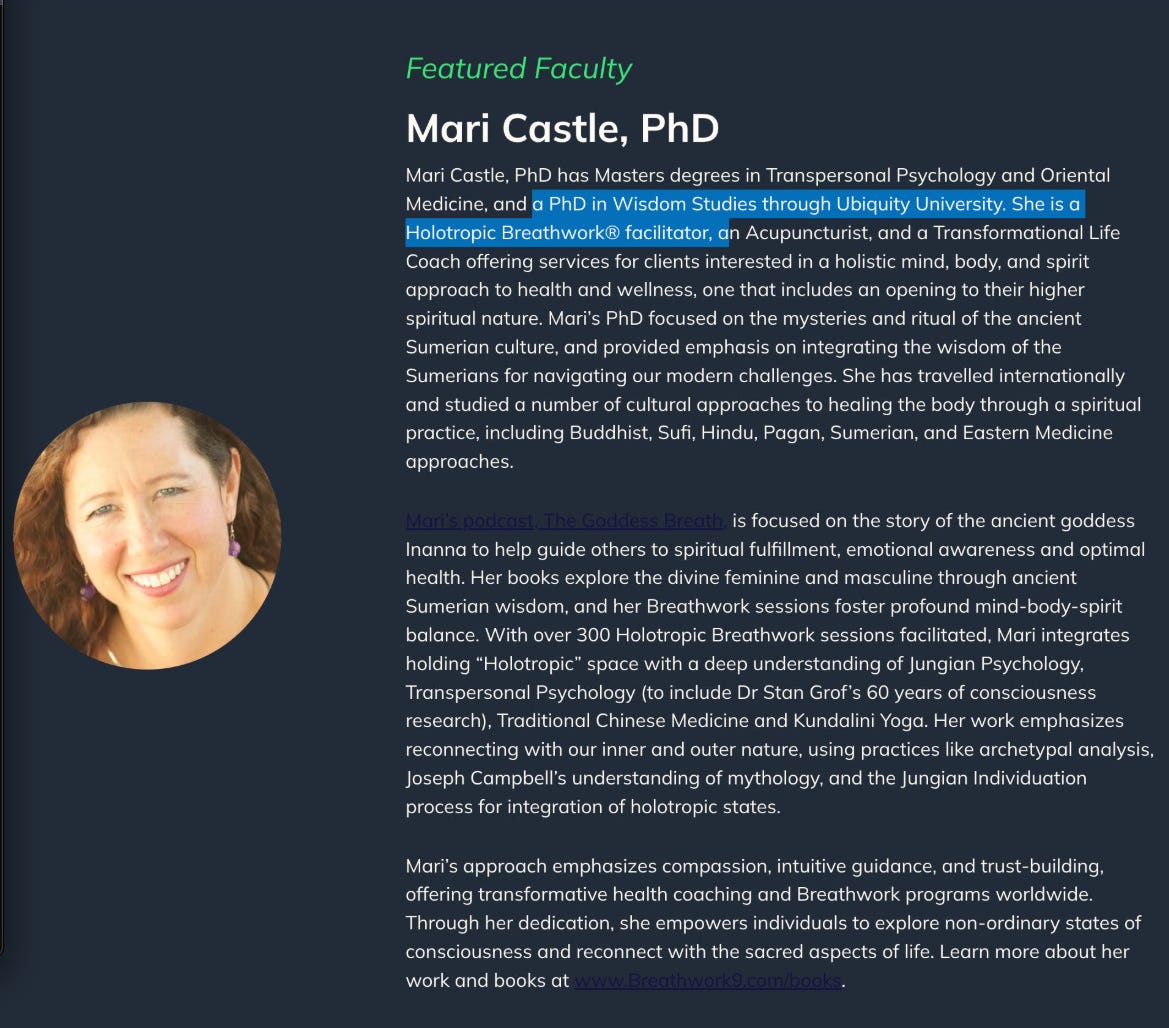
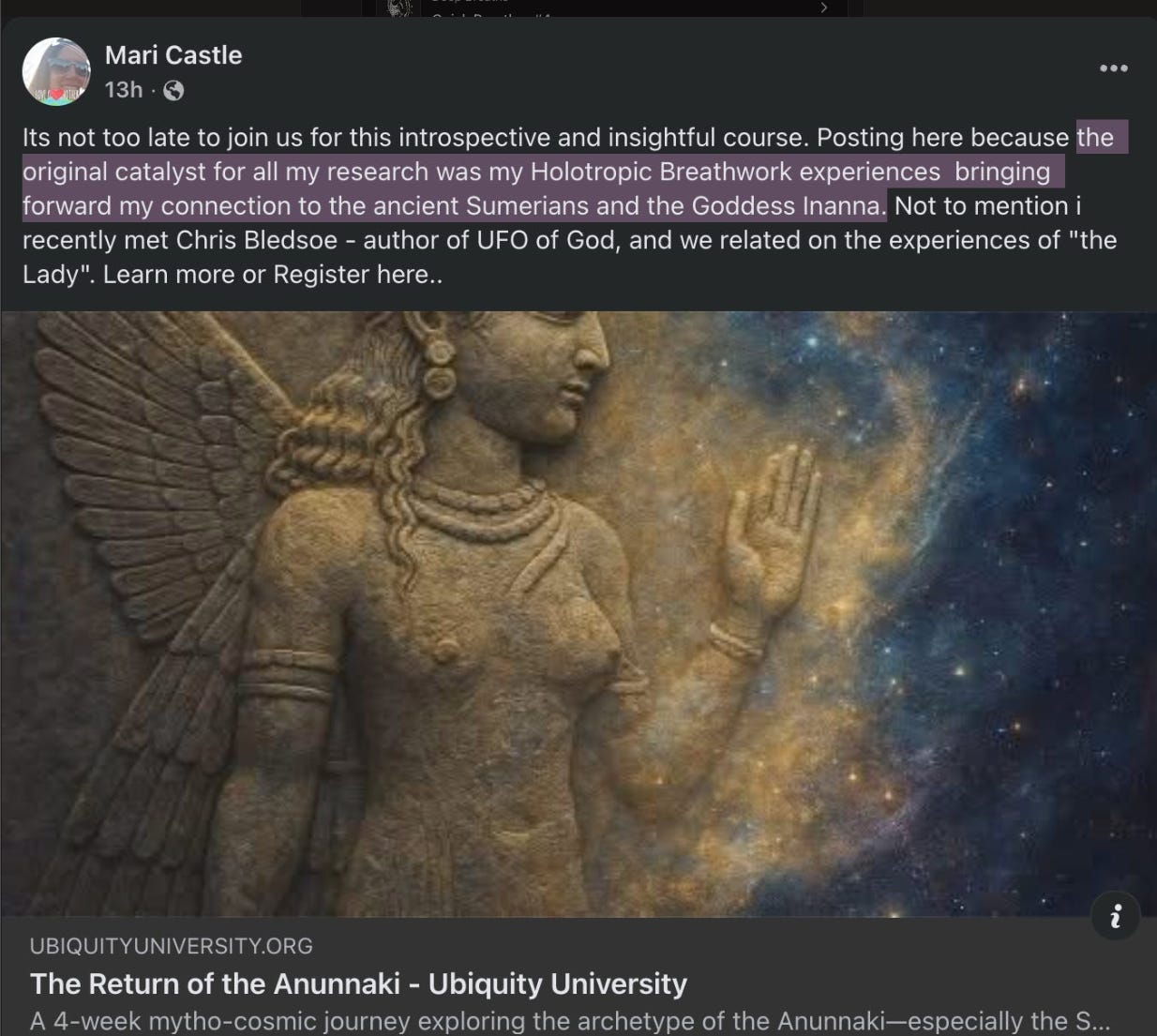
4.9.2025 – 2024 NYT (extremely pro) article on Holotropic Breathwork
Last year the NYT published an article on Holotropic Breathwork that I struggle to call “reporting”. The article weaves in the connections between HB, psychedelics and CIIS that reads more like a promo for the school than serious reporting. By giving a baseline of nuance to the psychedelic experience (“it’s not a panacea”), the author seems to absolve themselves of any need to look more critically at the actual subject of the article: Holotropic Breathwork. Now Holotropic Breathwork facilitators advertising through MAPS are using the NYT article to sell Holotropic Breathwork workshops. In a promo post for HB on the MAPS website: “The New York Times described Holotropic Breathwork as an effective way to heal yourself and improve mood”. I can see why they might think the NYT described HB this way. First, they cite a study on mood and “conscious connected breathing” i.e. not Holotropic Breathwork, despite sharing resemblances in being an active practice that encourages recovery of repressed memories. The study specifically states: “A specific feature of the breathwork technique applied in this study is that there was no psychological/ theoretical priming before the session”. The NYT article goes on to cite Grof himself, uncaveated:
“The effects of holotropic breathwork on the brain and mood. But in a European researchers found that the modality affected brain activity and mood in ways “that are associated with a better mental condition.”
In an interview, Dr. Grof, 92, said that he had discovered, much to his surprise, that breathwork sessions could be as powerful as psychedelic trips. Altered states, whether breath- or drug-induced, he said, often allow people to unravel the root causes of their suffering quickly, making them more effective than conventional treatments like antidepressants”.
So, does the NYT describe HB as “an effective way to heal yourself and improve mood”? Yes, the NYT says this but it’s certainly not well justified.
4.9.2025 – All Things Considered talk about JHU/NYU spiritual leaders experiment
2-minute NPR All Things Considered feature on the Hopkins/NYU psilocybin trial and Hunt Priest’s choice of expulsion from the Episcopal clergy in order to continue psychedelic “spiritual support and pastoral support for people that are thinking about it or have used it or want to use it in the future”. I hope we’ll see more in-depth coverage of this discussion on more platforms that cover religion/philosophy in depth. npr.org/2025/08/23/nx-s…
4.9.2025 – Quote from Gezon and Barlett, 2025
Psychedelics, Harm Reduction, and Life’s Big Questions: Making Sense of Spirituality and Religion After the Journey (Aug, 2025), Lisa L. Gezon | Kenton Bartlett
“Several participants found that psychedelics helped them heal religious struggles and foster a more positive relationship with spirituality. For example, Jamie felt disconnected from the Pentecostal church’s teachings, which she felt failed to address the poverty, abuse, and neglect she experienced in her small town in the Appalachian foothills where many people, including her close family members, struggled with addiction. Jamie shared that she had a traumatic upbringing. She attended church, hoping it could bring purpose to her hardships, but her experiences there did not provide relief from the abuse she endured at home. She explained to the focus group: “When I was growing up, I had a very, I guess abusive, traumatic [life]… I was living in hell, but I was always told that, you know, go to church, do the right thing. You’ll get rewarded for your struggles… So that’s initially why I went to church, even though it didn’t make sense—with all the things going on around me—how that was the answer….
Jamie first experienced psychedelics through Ketamine-Assisted Psychotherapy. Later, she took psilocybin in facilitated group settings and on her own. She described a lasting sense of tranquility following these experiences. Reflecting on her journey, she shared, “We’re all in search of this universal peace— this magical-like Union of Oneness. [And] I’ve come to find that I don’t need religion to be at peace.”
1.9.2025 – Holotropic Breathwork at Burning Man
Has anyone come across any mentions of Holotropic Breathwork at Burning Man this year? I’ve seen mention on tiktok of breathwork more generally, but nothing yet specific to the Grofian method.
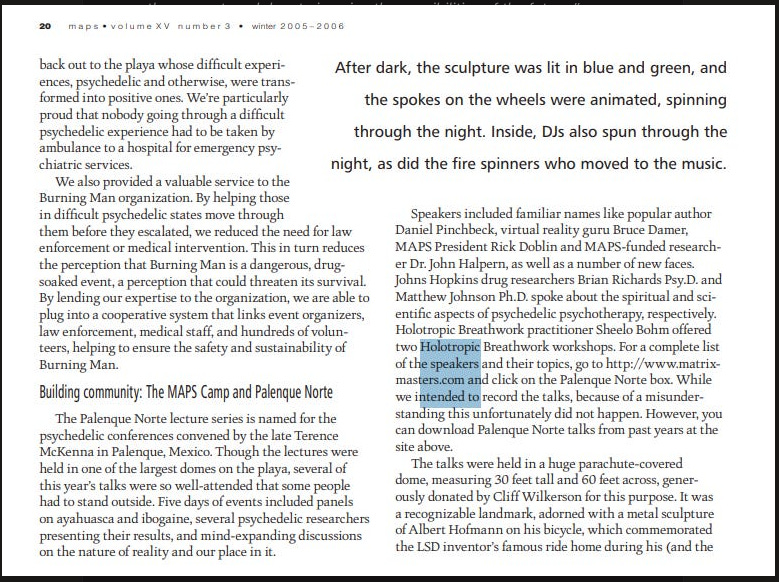
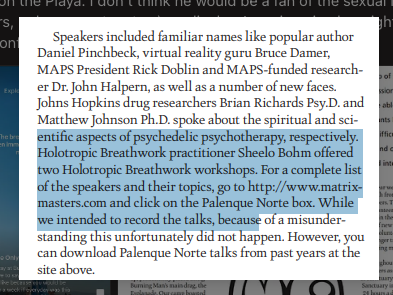
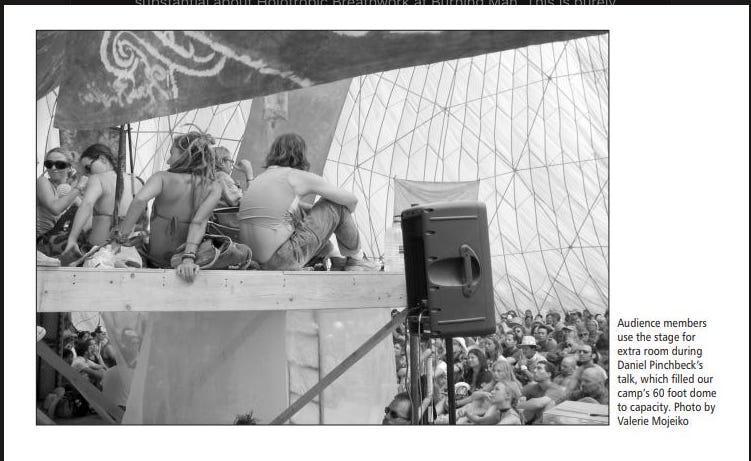
Of course, Rick Doblin (GPM II, certified Holotropic Breathwork facilitator) and MAPS as a whole have been burners for many years. The MAPS Bulletin, fall 2005, features a report from Burning Man with a very brief mention of Holotropic Breathwork. The article mentions MAPS celebrating their 20 year anniversary at Burning Man:
“We are already planning to make MAPS’ Burning Man project bigger and better next year. To improve our work in Sanctuary, we’re coordinating with the Rangers and with our team to generate and implement suggestions. These changes include more preparation for volunteers, better data collection, an improved shift schedule, and a clearer division of responsibilities. We’re excited to build on this project, creating a structure that will allow us to continue growing and improving. We had such a great experience this year that MAPS has begun preparations to celebrate our 20th anniversary at Burning Man 2006. (In an interesting coincidence, this is Burning Man’s 20th anniversary, too). Again collaborating with the Burners-formerly-known-as-Bop Camp, MAPS hopes to offer more talks, more interactive workshops, a separate large dome for visual art, and more ways for everyone to get involved. If you’d like to help, please contact MAPS staffer Valerie Mojeiko. We will need help of all sorts, including financial, to make this happen. We chose to mark our anniversary at the event partly because so many MAPS supporters attend Burning Man anyway, making it easier for many people than other suggested locations (like Sarasota and Jamaica). We also chose it, however, because Burning Man is a place where MAPS is in action. What better way to mark 20 years of MAPS than at an event that brings together working, learning, and playing? Join us as we celebrate the accomplishments of the past, work to answer the needs of the present, and dare to imagine the possibilities of the future.”
While the MAPS scene is big on the Burn, I can’t seem to find anything more substantial about Holotropic Breathwork at Burning Man. This is purely speculation, but I can easily imagine Grof being dismissive of Burning Man — does anyone know if he has commented/mentioned it before? He’s not a fan of electronic music, so that’s the first major sign he might not enjoy the vibes on the Playa. I don’t think he would be a fan of the sexual liberation (queers, polyamory etc. etc…) on display. I can imagine he might find this to be a confronting display of global crisis.

 Kayla Greenstien
Leave a comment